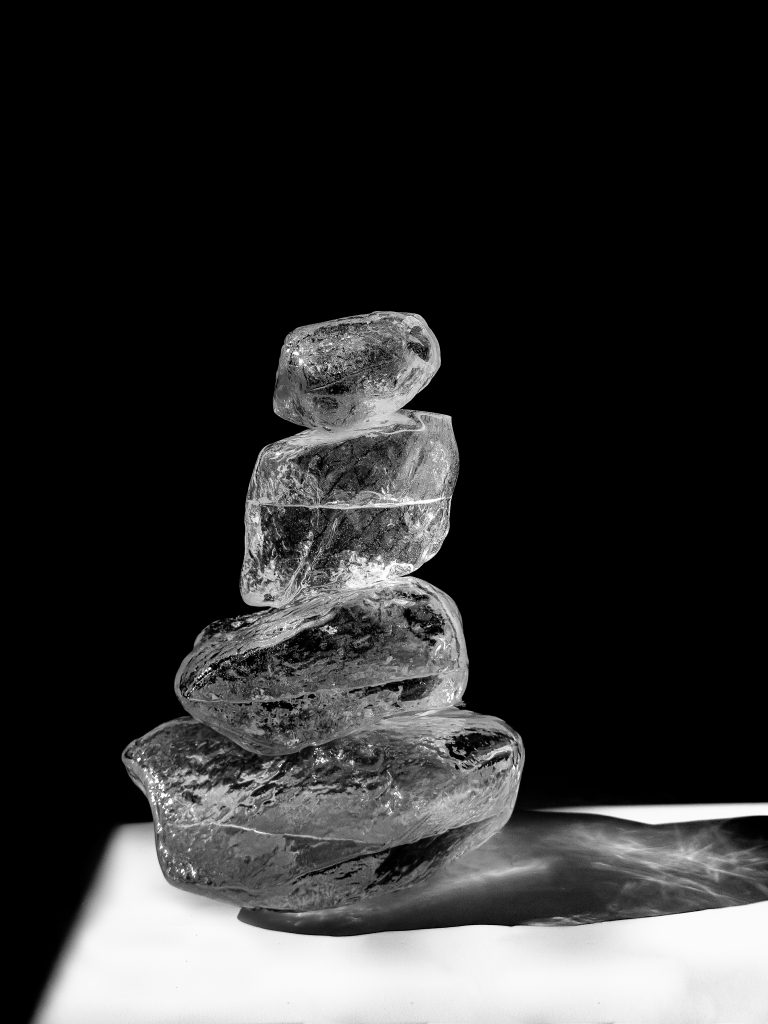
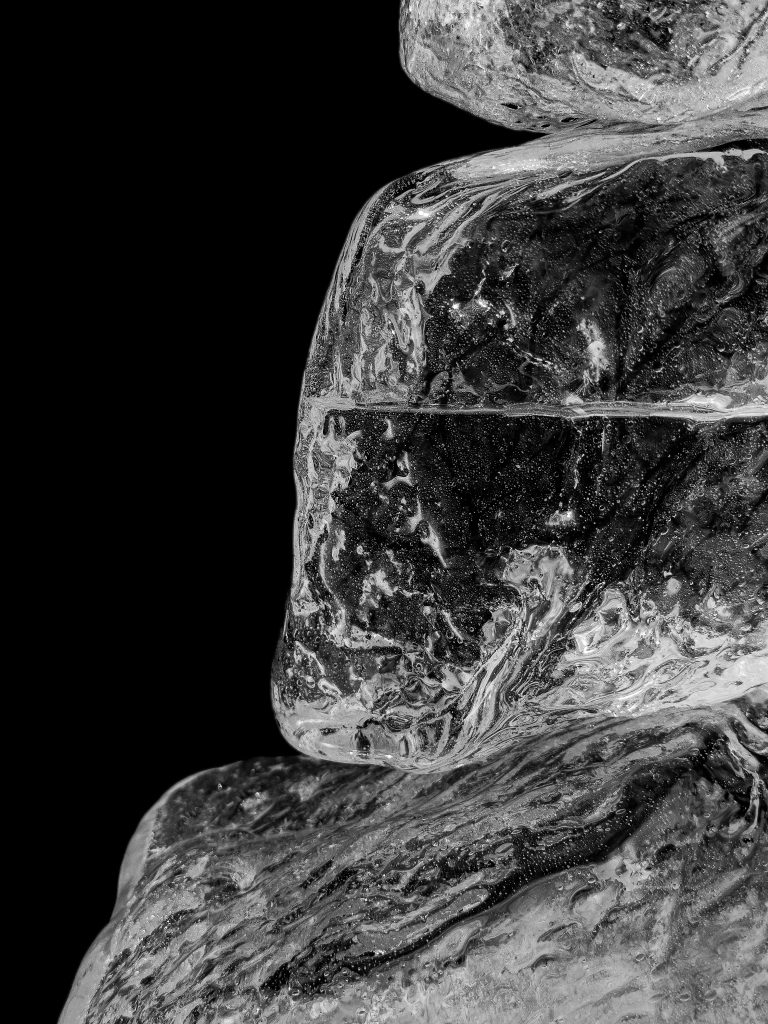
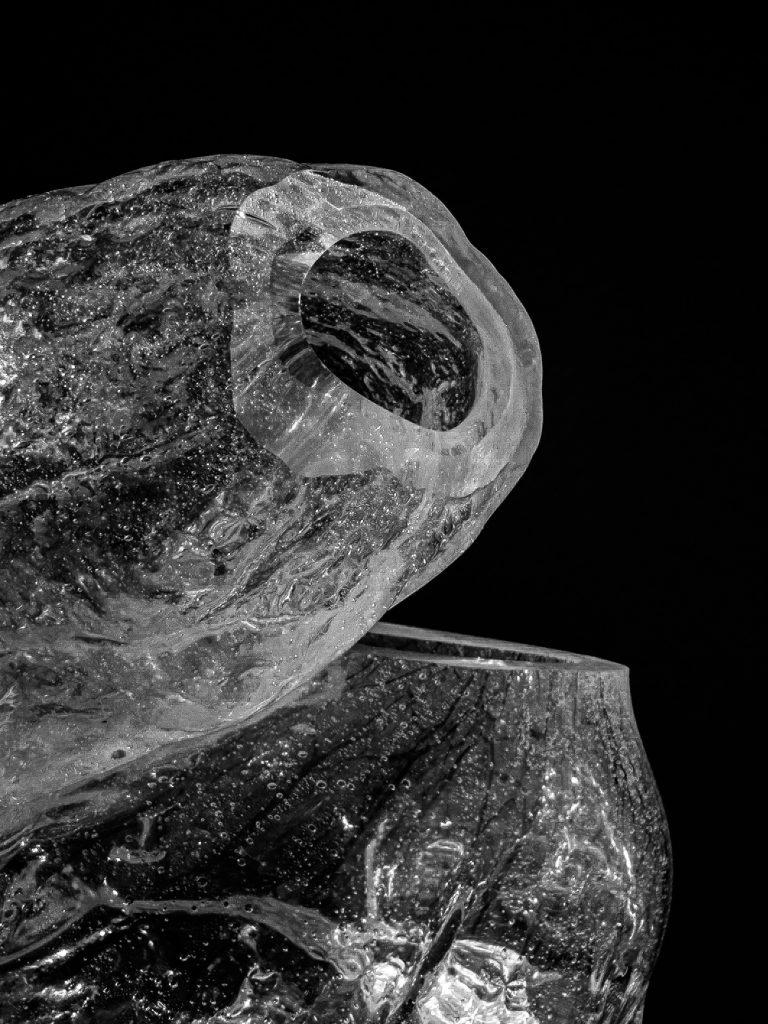
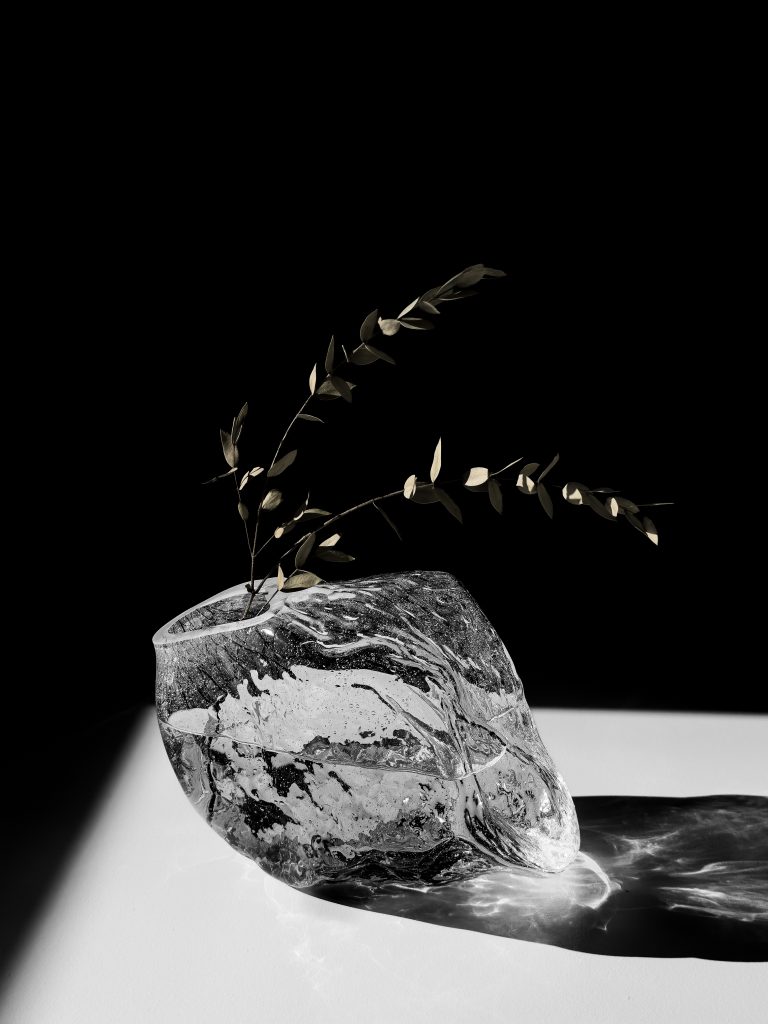
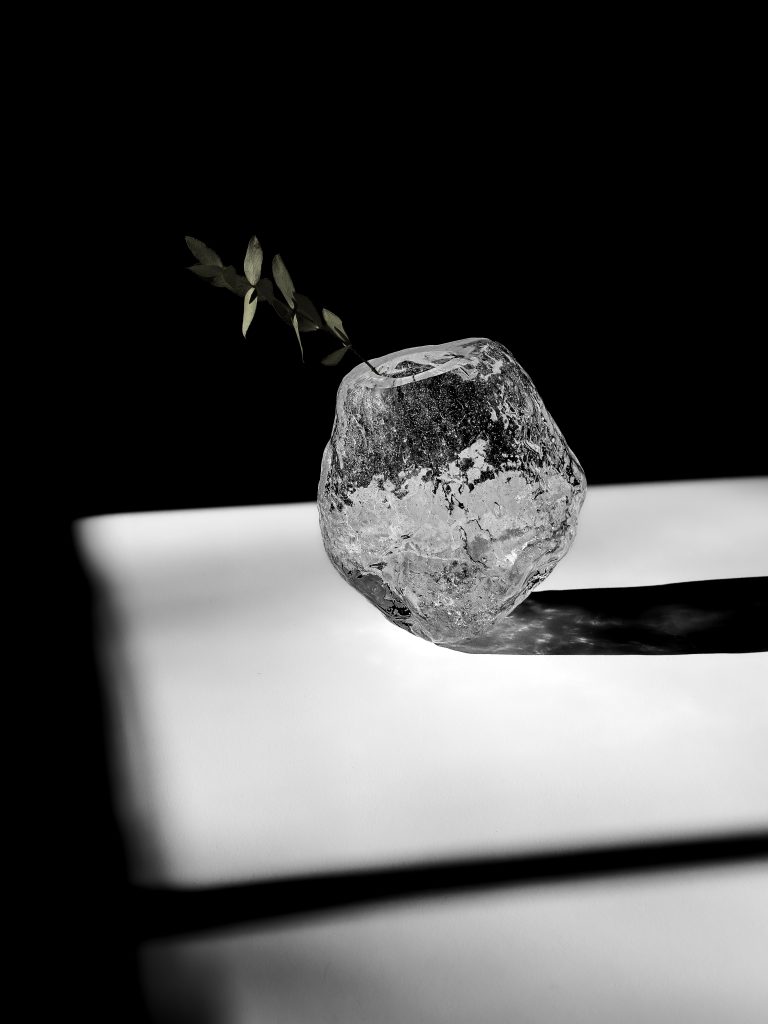
Moving Mountains examines the climate-induced increase in Alpine rockslides and translates their geological data into a series of water-filled glass stones, the volume of which is based on documented rockslide events. When stacked to form a ‘stoanerner Mandl’ – an archetypal waymarker in the Alps – the weight and movement of the water alter the stability of the individual elements and their interaction. This performative uncertainty highlights the fragile ecological tipping points of the mountains, as well as the role of humankind, which influences these processes whilst simultaneously attempting to balance them.
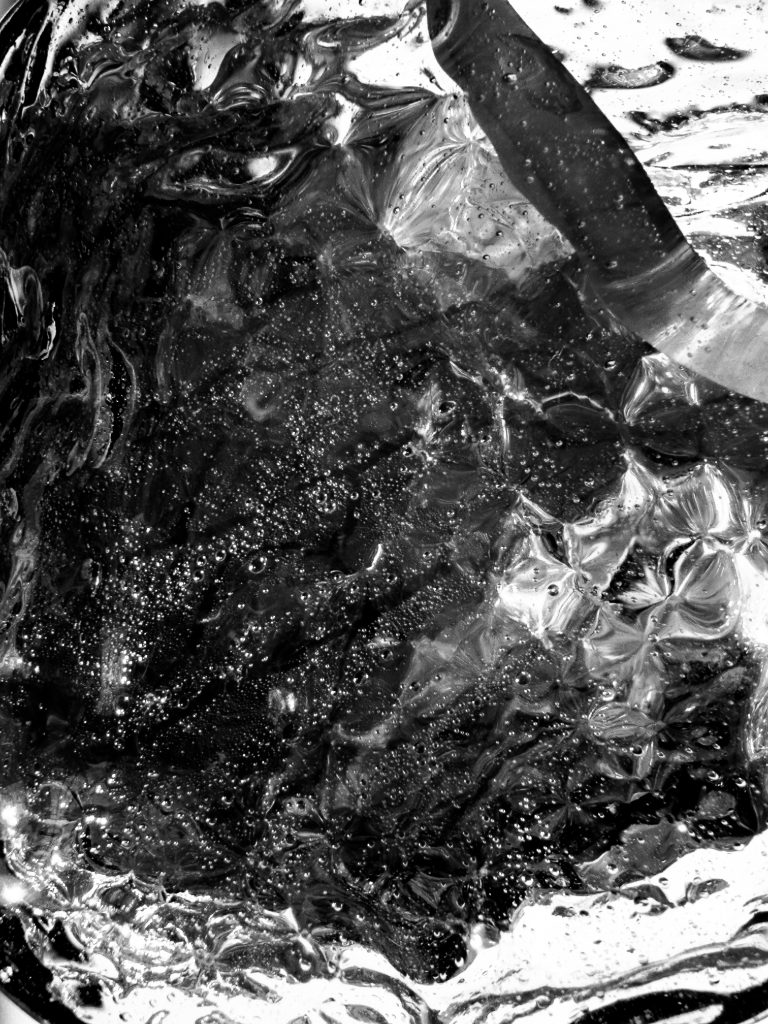
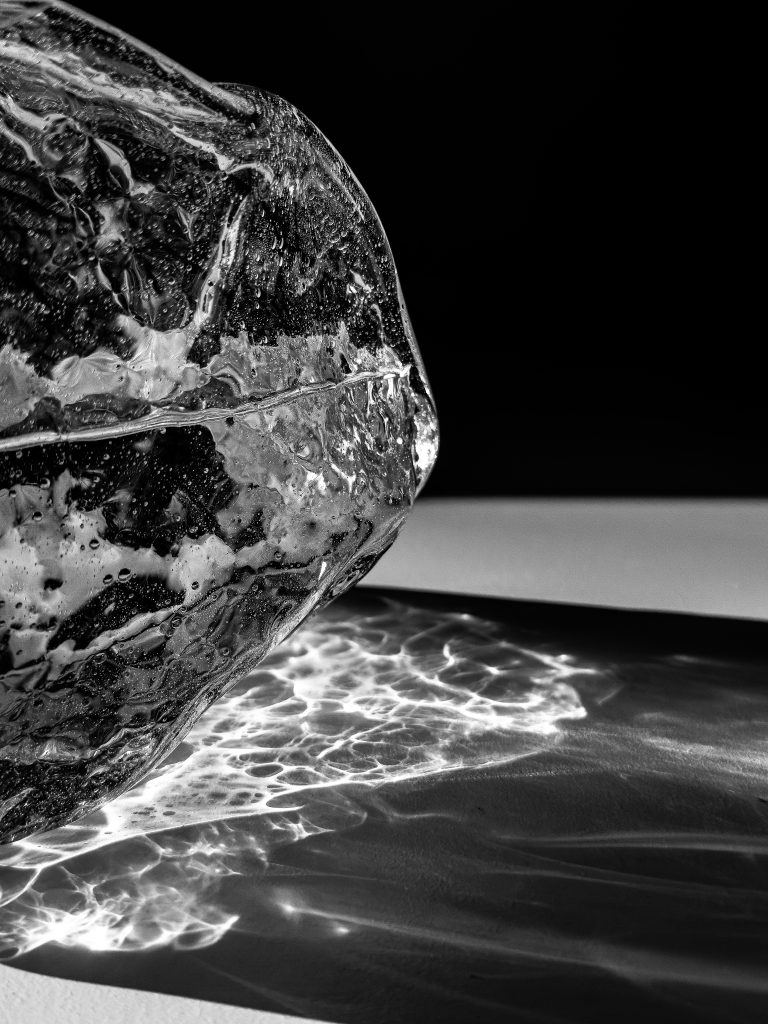
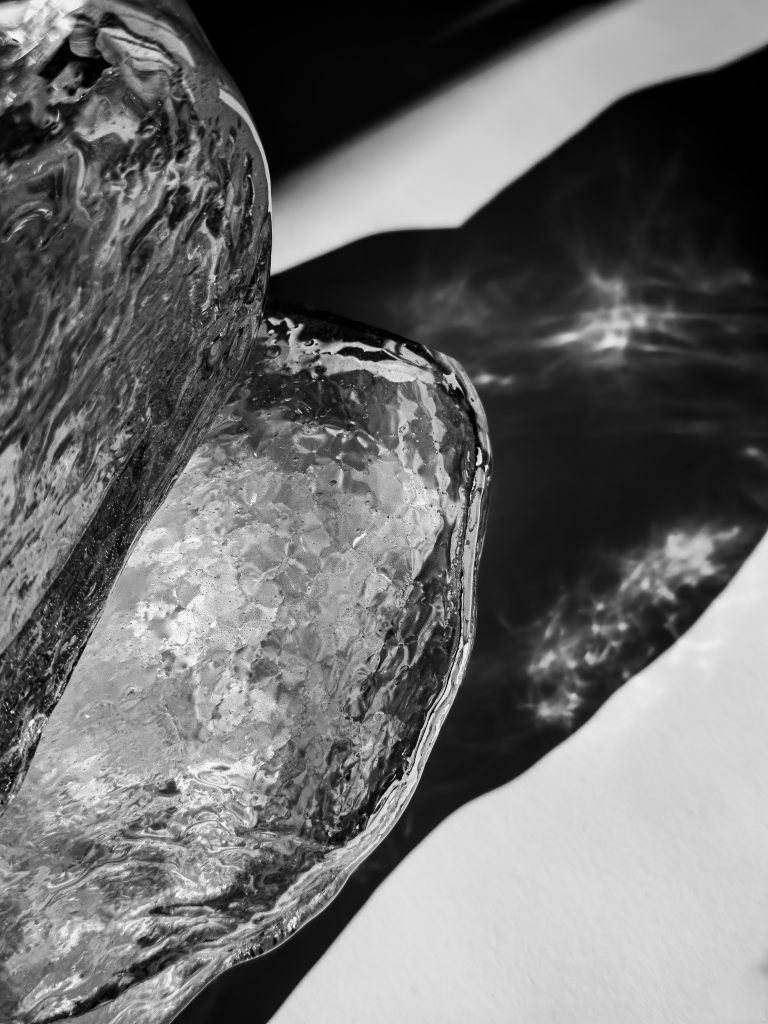
Glass, as an amorphous material lying between solid and liquid, serves as a material and temperature analogy for the change in the state of matter from ice to water in melting permafrost, which physically triggers rockslides. At the same time, the connection between glass and minerals – as found in the Alpine region and utilised for centuries in glassmaking – is brought to light.
Moving Mountains combines materials, geology and climate data to create a form of landscape change that can be experienced tactilely.